Recalculate thickness and pressure basis
The report checks actual shell and head condition against code-based thickness requirements to confirm how the vessel should be rated today.
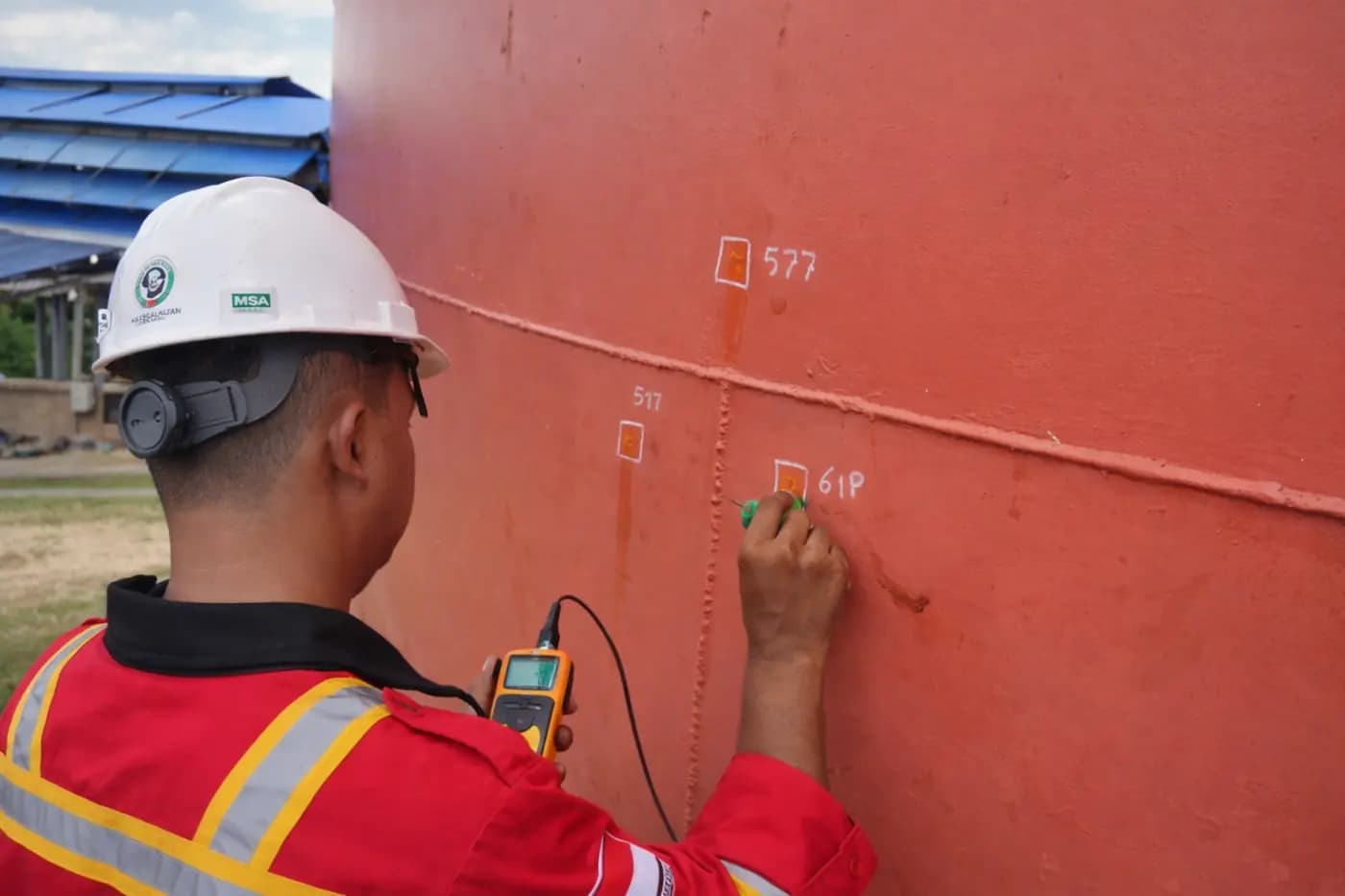
A residual life assessment for an LPG storage tank, focused on thickness adequacy, derating basis, corrosion review, and inspection interval planning.
This project evaluated the continuing serviceability of Storage Tank T-A/16248 through thickness review, corrosion-rate assessment, risk framing, and operating recommendations. The work was intended to provide a defensible integrity basis for a mature LPG storage asset.
The report checks actual shell and head condition against code-based thickness requirements to confirm how the vessel should be rated today.
The assessment compares actual measured condition, corrosion-rate assumptions, and pressure-vessel calculation logic to define the safe operating basis.
The output combines calculation results with qualitative risk review so the tank can be discussed in both technical and operational terms.
The client needed a balanced decision basis for continued use of an older pressure vessel where actual thickness, corrosion history, and operating suitability had to be interpreted together rather than in isolation.
We organized the evaluation around thickness adequacy, derating logic, corrosion-rate interpretation, and risk-informed inspection planning so the resulting recommendation stayed technically grounded and operationally practical.
The calculation appendix shows the integrity discussion had to move toward a recalculated MAWP / derating basis rather than simply repeating the original design rating.
The report categorizes the storage tank as medium risk and notes that no leakage or major failure event had been recorded in the operating history considered.