Review records and test history
The RLA process starts by reviewing technical documents, inspection records, maintenance history, and available replacement-part information.
A residual life assessment for a pressure safety valve on an LPG facility, including parameter review, code-based evaluation, and risk-oriented recommendations.
This assessment reviewed the condition and continued suitability of PSV ST-01 in LPG service. The scope combined parameter verification, reference-code review, likely damage and failure mechanisms, and the development of a clearer residual-life basis for continued safe operation.
The RLA process starts by reviewing technical documents, inspection records, maintenance history, and available replacement-part information.
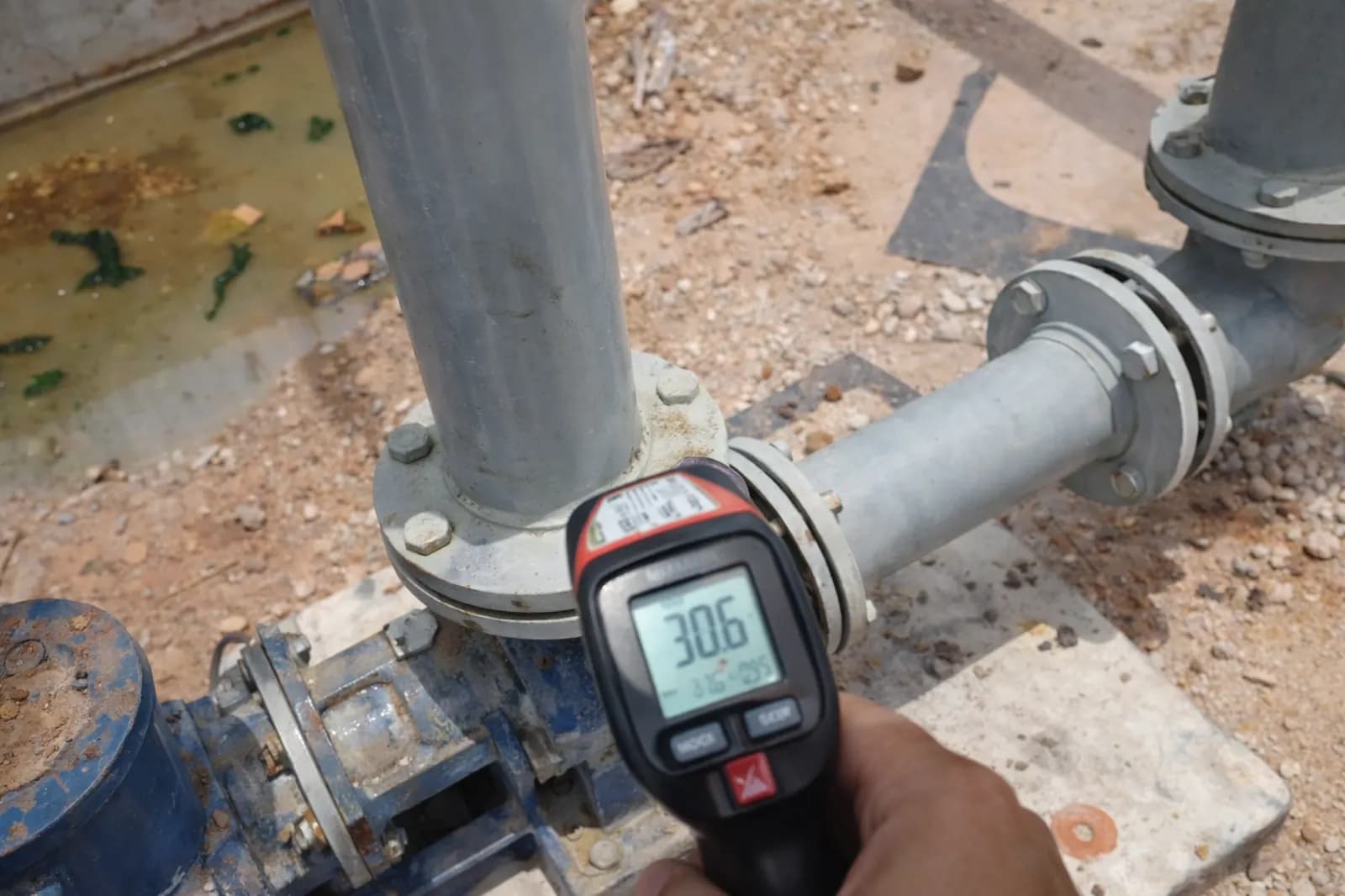
Visual inspection and data capture are used to verify the state of the installed PSV before the residual-life logic is built.
The report then combines damage-mechanism understanding, condition review, and optimized inspection planning for safer future service.
The project had to connect valve protection duty, inspection evidence, and code-based evaluation into one conclusion that would be understandable for both technical review and operating follow-up.
We structured the work around actual operating parameters, damage mechanism review, residual-life calculation logic, and recommendation framing so the client received a concise but usable integrity conclusion.
The report records available name plates, good PSV condition, no deformation indication, and no leakage indication during the inspected state.
The document notes that bench test in as-received condition is treated as the more efficient approach before cleaning and further intervention.